 "Rise...and Rise Again...and Again...and Again"
Every fifteen years or so, there must be a big budget remake of the "Robin Hood" legend—that's a bit less than the turnaround cycle for The Compleate Works of Jane Austen. The last time the fletches flew on the big screen there were two competing Hoods—the flashy Kevin Reynolds/Kevin Costner version and one starring Patrick Bergin. Before them was "Robin and Marian," various series, and "The Adventures of Robin Hood," the Warner Bros. classic with Errol Flynn, which was itself a remake of silent versions. Then, there have been satiric vignettes in "Shrek" and "Time Bandits,"* Mel Brooks has done a movie ("Men in Tights") AND a series ("When Things Were Rotten")—Mel loves his Public Domain. Disney has touched on it a couple times as well, including an animated funny animals version.
The character and his ancillary co-stars have a long oral tradition with many variations of "The Hode," so it's natural that someone drums him up for another "Have at ye" every few years, each reflecting the times in which they were made. Robin has been yeoman and nobleman, Crusader and thief, trickster and military man, young and old. Although we've been down this well-trod pathe in the glenne before, it was interesting to think about what the "Gladiator" team of Ridley Scott and Russell Crowe could do with the story, and how they would approach it.
And the answer is: with a little bit of everything. Scott with the help of scenarist Brian Helgeland** has a Robin Hood, an orphan Saxon Crusading with Richard the Lionheart (Danny Huston-he's great in this), who's an expert bowman and strategist by day, and a grifter by night. At the end of the Crusades, he is given a task, the complications of which lead him to Nottingham and the masquerade of being Robert Loxley, slain son of Sir Walter Loxley (Max von Sydow) and spouse of Lady Marian Loxley (Cate Blanchett)—this Robin is both commoner and gentry. The Sheriff of Nottingham (Matthew McFadyen) is not given much to do this time 'round, instead the intrigues are by Sir Godfrey (Mark Strong) and King Phillip of France, who plot to undermine the already shaky reign of the new King John (Oscar Isaac), the last son of King Henry and Eleanor of Aquitaine (Eileen Atkins), and invade England.
The general structure of "Robin Hood" is superficially similar to “Gladiator” with big battles at both ends, and Scott uses the same stutter-shutter technique to give some verve to the action scenes. But there it ends. Crowe is considerably lighter as Robin Hood, though he does summon up genuine moments of drama. Performances are fine all around withCate Blanchett and William Hurt being stand-outs. But the best performance is by Max von Sydow as the elderly Sir Walter. Blind, but nobody’s fool, Sir Walter takes the news of his son’s death with grim determination and courtesy for its messenger, and comes up with the Robin-as-Loxley ruse to protect Marion from having their land confiscated should he die. Von Sydow has been ill-used of late, playing teutonic villains of similar coldness, but this role shows him at full thespian power, and it would be robbery if he was not nominated for an Oscar for this performance.
The film boasts good values all around, with Scott’s keen eye for cinematography and detail, the writing is clever and often ingenious (I think the fact that it's another Robin Hood movie sours a lot of people's expectations). The film never drags and offers considerable entertainment value. Only at the end does it falter, with a beach battle that seems overly-stretched in terms of production value and credibility. Either there was not enough planning or extras, but it looks to be constructed to not show something as opposed to creating an epic battle. Too much is made of the presence of landing craft as obstacles, and of one particular participant in the clamor, which seems to be done for scoring political points rather than good story-telling.
But that is twenty minutes out of 140. For the most part, this new “Robin Hood” hits its mark. Yes, it might be superfluous (we can say this—with a straight face—with so many sequels headed our way?), but what's there on the screen is an interesting "take" on the legend that has lasted so long.
"Robin Hood" is a Matinee.
* John Cleese's immaculate nobleman with a "Bonny Prince Charlie" manner is one of my favorites.
** The original script, by the team of Ethan Rieff and Cyrus Voris, called "Nottingham," was more radical, but interesting in a concept-twist kind of way, but once Ridley Scott came on board, the concept changed.
Tuesday, May 18, 2010
Robin Hood (2010)

Tuesday, June 24, 2008
The Incredible Hulk
 The "Maybe-Not-So-Much-Incredible-But-Certainly-An-Improvement-Over-The-Last-Time" Hulk
Don't get me wrong. I admired what Ang Lee tried to bring to the, by now, here-to-stay "Superhero" sub-species (meta-species?) of action-adventure films. Taking his cue from Bryan Singer's "no, it's really about something" furrowed-brow approach to the "X-men," Lee (no relation to Smilin' Stan) made an examination of the rigors of the scientific mind, battling inner demons brought on by a repressed memory of child abuse, and made manifest in the form of a big green berserker id, The Hulk, equal parts Mr. Hyde and the Frankenstein monster.
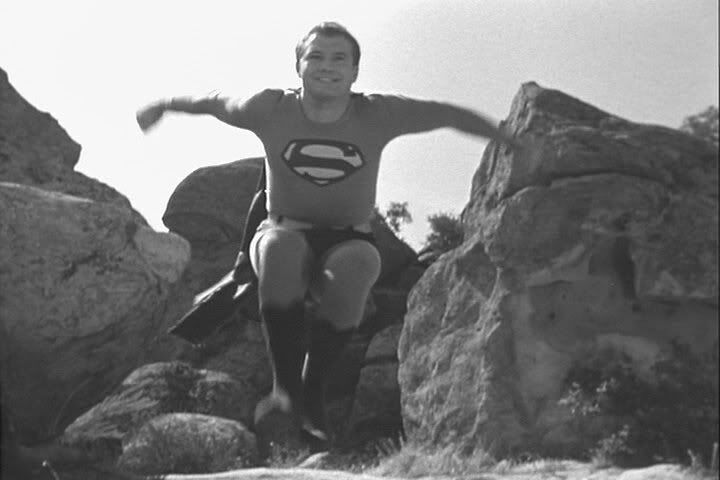
Good thoughts. But we're talking "The Incredible Hulk" here. These films should take their cues from the "Superhero" epithets espoused by the characters, like Superman's affirmative "Up, Up and Away" or Batman's introspective "criminals are a superstitious, cowardly lot" (these days he just says "Hrn."). "The Hulk" (in one of his incarnations) never got beyond "Hulk SMASH!" He's not the most sophisticated of heroes,* he's as pure a power-fantasy for nerds as can be--a three-year old with super-strength. So to pile on the daddy-complex psychology, when what people basically went to see was the Big Guy punch holes in things was putting a lace doily on a trash-compactor. Lee had fun bringing back split-screen to simulate comic panels (which was nifty), but "Hulk" was depressing...and not in a good way, like the "Batman" films. If you want angst, best take it only as far as "The Seven Samurai."


So, three years later, with "Marvel Studios" in control of (most of) their characters, and an eye towards creating an "Avengers" film in the future, comes a re-vamped "Hulk," with Ed Norton replacing Eric Bana, Liv Tyler for Jennifer Connelly, and William Hurt (made ruddy and silver-maned) for Sam Elliott. As good as those performers can be, the substitutions are all improvements. And this "Hulk," has no other agenda than to be a chase-and-fight film, and succeeds quite well in its humble goals.
Some Hulking thoughts:
The credit sequence re-writes the Hulk's origin-story (always a drag on these films, and is patterned after the TV-series), and gets going with Banner on the run. He's hiding in Brazil, working at a bottling plant in the densley populated box-city of "Rocinia Favela," in computer contact with a research scientist, and working on breathing disciplines to make sure he "don't go changin.'" It makes Banner a less helpless character than the last film, and gives him a goal.
Norton's re-write of the script (by Zak Penn--who wrote the last two "X-men" films and "Elektra" and gets full script credit on the film), is clever, detailed, and plays to the actor's calculating strengths. Plus, his Bruce Banner is a sickly-thin, not buff, scientist--in good shape, but not super-hero material. Nice contrast with the uber-defined Hulk.
The cameos all work terrifically, are integrated well, and show obvious affection for their subjects: Stan Lee (though not a drooling fan of his, one has to admit this is his best cameo, and he's terrific in it), Lou Ferigno (he looks great!), and, in an "Aw!" moment, the late Bill Bixby. Plus, Robert Downey, Jr. makes an appearance as Tony Stark (Iron Man).
Tyler and Norton do wonders with the stormy (heh) Betty Ross-Bruce Banner romance. Connelly and Bana never seemed to connect in the first film, and seemed quite diffident to each other. Not here.
Hulk does more than roar and punch. Here he is quite capable of using collateral damage as a defense and weaponry (and kudos to the sound design team for the police car sequence). There is one scene of Hulk being attacked by "sonic-blast" weaponry that is as enjoyably "comic-booky" as in any of these films.
Tim Roth makes a very effective villain, green with envy for The Hulk's power, and the simple monster a monster plot is stream-lined and moves along while not feeling very draggy (as the battle sections of "Iron Man" did).
Director Louis Leterrier keeps the pace going, as one would expect of a director of the "Transporter" films, and there are extended chases through that Brazilian slum-town that recall the run-downs of the "Bourne" series and the parkour scenes of "Casino Royale."
Leterrier also treats the Hulk like the shark in "Jaws" (or "Batman" in "Batman Begins"); we only get glimpses of him in the dark, as big pieces of machinery go hurtling through the air, placing the audience in the same disoriented mode as the "wet" squad sent to capture him.
Bruce Banner has a Blue Heeler like I do. How cool is that?
It made me happy, right? I enjoyed myself, right? So, why not as high a rating as, say, "Indiana Jones?" Because, as fun as it is, the effects scenes tend to look a bit shoddy on the big-screen. The Hulk, himself, looks a bit too much like one those plasticene statues of "the Hulk" you see at comic-shops, and things like helicopter inserts have a video-game quality to them. Everything about it is fine, but I don't think the film will suffer on the small screen. You don't need to spend full-bore on "The Incredible Hulk" to get the most out of it. The decision is economical, rather than artistic, and for that, "The Incredible Hulk" goes down a notch.
"The Incredible Hulk" is a rental--he'll look better on the small screen, and you won't miss much.
* Face it, "The Incredible Hulk" is "Dr. Jekyll and Mr. Hyde" (in the comic book and the first film, the transformation is accidental, while in the tv series and this film, Banner does it to himself). And it's always creeped me out a bit that you could make a "hero" out of "Hyde." But combined with the "poor, poor monster" aspects of Frankenstein (Kirby's early flat-topped Hulk looked an awful lot like Karloff), and the tv series' driving it further, by using "The Fugitive's" running victim conceit, you could tame the brute.
Thursday, January 17, 2008
Into The Wild
 Finding oneself and getting lost
There is a pleasure in the pathless wood,
There is a rapture on the lonely shore,
There is society, where none intrudes,
By the deep sea, and music in its roar:
I love not man the less, but Nature more,
From these our interviews, in which I steal
From all I may be, or have been before,
To mingle with the Universe, and feel
What I can ne'er express, yet cannot all conceal.
Lord Byron
The films of Sean Penn's directorial career have all carried the underlying theme of obsession. But until now, he has always shown the dark side of it-- "The Indian Runner," "The Crossing Guard," "The Pledge"--the latter two focussing on revenge, of sorts--the Need to get even, to balance the books, to set the world and Nature right. But with his Oscar-winning role in Clint Eastwood's "Mystic River," he seems to have cauterized that need from his system. His new film, "Into the Wild," is just as obsessive but presents more of a spiritual quest. Nature is already balanced. Now one must become a part of it. Based on Jon Krakauer's book (which is expanded from this article on "Outside Online"), it dogs the footsteps of Christopher McCandless, who upon graduating from college, disappeared on a journey across the country and eventually to Alaska, where he tried to live off the land, and his body was found by moose hunters in an abandoned bus. If he wanted to become one with Nature, he achieved it. But there's no great trick doing that. As so often happens, the destination isn't as important as the journey.


Penn (who also wrote the complex screenplay) presents McCandless' Odyssey as a rite of passage, literally divided into chapters, starting with his shedding of everything tying him to a middle-class life like his parents (played cold and shrill, by, respectively, Willian Hurt and Marcia Gay Harden), and simply disappearing, leaving no trace, and ensuring that he would have at least a couple months head-start before anyone knew he'd left. These chapters serve as flash-backs of a sort (given the opening of the film, the whole thing could be a flash-back) to McCandless' day-to-day life living in the abandoned bus/hunting drop that would unwittingly be his last stand. The narrative is punctuated by McCandless' writings in dreamy, floaty script, and a journal-like view from home from the perspective of his sister (played by Jena Malone). Each chapter begins with an extended montage played over songs by Eddie Vedder (which sounds like it could be horrendous, but Vedder's introspective lowing is the perfect counter-point to the images--one begins to look forward to the transitions). The results are never less than hopeful while never losing sight of the hardships along the way, the lessons learned and the experiences along the way.
Or the people. Along the way in the form of jobs worked, beds crashed, and meals shared, McCandless (who travels by the name of "Alexander Supertamp") encounters reflections of his parents and free spirits who push him to abandon his mental baggage, that, instead of establishing lasting ties, only steels his determination to complete his trek to Alaska. Here the movies shines with wonderful performances by Catherine Keener, Vince Vaughn (who's great), Hal Holbrook (who is heart-breakingly good-he should be recognized for this) and some folks that Penn just found on location (including a guy named Brian Dierker, who runs a ski shop in Flagstaff, Arizona--first movie--endearing performance). And its here that if the movie has a weakness, it is that Everybody Loves Chris, wanting him to settle, and by having that be the sole reaction, one's manipulation-shield is engaged, wondering if Penn is stacking the deck, making his McCandless not merely charismatic, but near-messianic. Counter that with the fact that these people are road-blocks to his purposes, while being necessary way-stops on the journey, and those quibbling mountains become mole-hills.* I suppose one could have done more to balance his character (for example, including the opinions of the native Alaskans who thought him merely "stupid"), but short of showing him rolling a drunk, I'm not sure that such a pruning would be all that worthwhile. His encounters are already showing the roads not taken, it is THIS path that is the subject of the film. Anything else would be a detour.
I didn't want this film to end, frankly. It's truly exciting to see a director use a kaleidoscope of techniques to tell a story that celebrates life.
"Into the Wild" is a full-price ticket.
* I wrote this entire review without mentioning the amazing work of Emile Hirsch as McCandless--the guy's in the ENTIRE movie, and if McCandless is too much of a good thing, it's because Hirsch's performance is so constantly winning, and focussed. You're compelled to keep watching this kid, and fear that his next step will be wrong. It's an involving, remarkable performance. While Penn's work is astonishing, he has the best co-conspirator in Emile Hirsch. His next role? He's playing "Speed" Racer. He looks just like him, but...I mean, c'mon AAAAUGH!