The Story: "You'll shoot your eye out, kid!"
When thinking about what to do for today's Christmas Edition, I tossed around a lot of Christmas Classics: It's a Wonderful Life...of course!; Any of the "Christmas Carols" (my fave's being "Mr. Magoo's..." and the one starring George C. Scott; "A Charlie Brown Christmas"...not strictly a movie, but sure, or "The Grinch" (Chuck Jones's animated version--you can stuff the Ron Howard-Jim Carrey thing right up a chimney!); and of course, The Miracle on 34th Street, Home Alone, Die Hard and the dozens of Christmas scenes in un-Christmas-y movies.
But it had to be A Christmas Story. There was no other choice.
Bob Clark wasn't necessarily a great film-maker--you look at his resume and you see the original Holiday slasher film Black Christmas and the first couple of Porky's (they were his big hits, and gave him the creative cache to make this, his dream project). He worked for ten years on the script based on radio monologist Jean Shepherd's story collection "In God We Trust...All Others Pay Cash," and he worked on it with Shep and his wife, Leigh Brown, until it was just so. He cast it meticulously, giving Darren McGavin and Melinda Dillon Immortal Roles, roles they'll be remembered for long after they're dead...and casting little known Peter Billingsley, sharply dead-pan kid-actor—who looks like a bonsai'd Phillip Seymour Hoffman—now Executive Producer.*
In Hollywood, they have the phrase, "You're only as good as your last movie." Then there's the Billy Wilder corollary-the more-accurate "You're only as good as your best movie."
A Christmas Story is Bob Clark's best movie, and that's how good he was. It cemented its reputation as a "classic" fairly quickly so that now, twenty five years after its debut, you'll find it all over the television during the Holidays (along with perennial It's a Wonderful Life). Through a combination of Shepherd's exquisite writing (he also narrates) and Clark's crack timing, this unimprovable little gem manages to be clear-eyed about the world and endearing at the same time. And it's never as spot-on as when Ralphie goes to visit Santa Claus at The Department Store to plead his case for a particular Christmas Wish.
We've all been through the ritual: the Manic Anticipation, the Performance Anxiety, the Shock of seeing your dreams made flesh...and Marlboro-scented flesh, at that. The elaborate ritualization of adults trying to hawk to parents pictures of their children's dreams amid false-front stage-craft swamps the moment in propped-up manic Holiday Magic and the children end up confused and terrified. In "A Christmas Story," Santa is perched at the top of an Everest-like flight of stairs, like a religious icon in a pilgrimage, and the Exit from the goal is a nightmarish red slide that, following the Santa-shock, must feel like being dashed to the Earth. Or sent to Hell.
And, of course, Santa is a "Bad Santa": he's a Holiday employee, underpayed and jaded and tired of having his thighs crushed by a perpetual onslaught of rug-rats in all sizes and stages of...wetness...for a numbing Holiday store schedule of 16 hours a day. And he can spread on the charm with a trowel, but it doesn't register when his little cherubic hostages are shocked to find that they actually have to form two words in a sentence to this red behemoth after they've been drilled to Never Talk to Strangers, even if that Stranger is a Mythical Being Who is Judge, Jury and Executioner of their Dancing Sugar-Plum Dreams. Jiminy Christmas, this guy sees you when you're sleeping, fer pity's sake.
That's scary. So's his get-up.
We won't even mention the Elves.
And that Ralphie should choke on his prepared spiel, yet somehow snatch victory from defeat only to then have his hopes dashed--Billingsley's North-Bi-Polar reactions are hilarious--makes that long slide back to Earth leaving him dazed and more than a bit confused among the false cotton clouds a textbook example of the power of stillness.
He's almost like Charlie Brown, beaned by a line-drive, layed out on his pitching mound shield, pondering if he should ever get up again. That the whole sequence is an elaborate build-up to the Ultimate Pay-off of the film's running gag, just makes the effect of that punch-line that much sweeter.
The Set-up: Ralphie (Peter Billingsley) wants one thing for Christmas: a Red Rider BB gun. But every time he brings it up...to anyone...they say the same thing—that he'll shoot his eye out with the thing. Undeterred, Ralphie has campaigned openly to his folks, his teacher—anybody who might have some influence on the Jolly Old Elf to help him get that BB gun.
Then, on a Family Christmas Outing to the Big Department Store, Ralphie, with kid-brother in tow, awaits in the infinite line to see Santa (Jeff Gillen). Now, it's nearing closing time, and the elves are getting restless. Ralphie has just one shot to go right to the Source!
Action!
 Store Santa: If Higbee thinks I'm working one minute past 9, he can kiss my foot!
 Santa: Ho-ho-ho-ho-HO-HO! Come on up on Santa's lap! (disgusted but keeping up the act) Ha-ha-ha, there's a wet one! And what's your name, little boy?
Billy: Billy!
 Ralphie (tugging on his kid brother): C'mon, Randy!
 Santa: And what do you want for Christmas, Billy? (voice goes high) A toy truck? Get him off my lap! Quick! Get me a towel!
(Billy's hoisted, screaming, into the air, and shoved, forcefully, down Santa's slide by an elf who waatches the kid's terror with glee.)
Santa: Bye, Billy! Oh-ho-ho.


Billy: Ahhhhhhhhhhhh!


 Santa: Ah, I hate the smell of tapioca! (back in character)Ho! Ho! Ho! Merry Christmas!

 Store Announcer: Attention, shoppers! It is now 9 pm and the store is closing.
 Narrator: 9:00! Great Scott! The store is gonna close!!
 Elf #2: Santa can't wait all night, let's go!

 Santa: C'mon up on Santa's...lap! Augh! Ho! Ho! Ho!
 Nerdy-kid: AAAAAAAAAAH!!!
 Nerdy-kid screams and is shoved down the slide. Randy is grabbed by the female elf and hauled up the stairs to Santa's chair.


 Elf # 2: Get moving, kid!
 Elf #2: Quit dragging your feet!
 Santa: Ho! Ho! Ho!
 Santa: Ho! Ho! Ho! Oof! heh-heh! Ho-ho-ho!
 Randy screams piercingly.
 Ralphie goes into a mild panic that Randy's outburst will affect his chances of seeing Santa.
Santa: Uh-oh! Get him out of here!


 Randy is sent sliding. Ralphie watches as Randy is sent down the slide screaming, and lands in the cotton clouds below to simper.


 Elf #2: Come on, kid!
 Santa: Ho! HO! HO!
 Elf #2: C'MAHN!
 Santa: Come on up!
 Santa: Come on up!
 Suddenly, it's all a blur to Ralphie. Santa's appears to be too close, and his laughter is pitched lower and distorted like in a fever-dream.
 Santa: Ho! Ho! Ho! Ho! Ho!
 Santa: Ho! Ho! HOOOOO!
 Ralphie swallows hard.
 Santa: And what's YOUR name, little boy?
Elf #1: Hey, kid!
 Elf #1: Hurry up, the store's closin'!!

 Elf #2: C'MON...!
 Elf #2: Listen, little boy, we gotta lotta people waiting here, so GET..GOIN'!


 Santa: What do you want for Christmas, little boy?
 NARRATOR: My mind had gone blank. Frantically, I tried to remember what it was I wanted. I was blowing it, blowing it!
 Elf #1: C'mon, kid!
 Santa: How about a nice football?
 NARRATOR: Foot-ball? Foot-ball? What's a football? Without conscious thought my voice squeaked out: "Football."
 Santa: Okay, get him out of here.
 NARRATOR: A football! Oh no, what was I doing? Wake up, stupid! Wake up!
 Ralphie is hauled off Santa's lap, and shoved down the slide, but in a super-human effort, he jams his foot out and braces himself mid-slide.
 Ralphie: NO!!

 As Santa and the elfs stare uncomprehendingly. Ralphie struggles mightily to climb back up the slippery slide and confront Santa.
 Ralphie (fast): No, I want an official Red Ryder carbine-action 200-shot-range model air rifle!!
 He got it out! He grins gleefully at Santa.
 Santa: You'll shoot your eye out, kid!
 Ralphie's face falls.
Santa: Merry Christmas.

 Santa: Ho...Ho...Ho!
 Santa puts out a black boot and casually kicks Ralphie back down the slide.

 Ralphie: NOOOOOOOOOOOO!
Ralphie yells all the way down the slide like he was being sent to Hell, then flops onto the cotton clouds, lying stunned on his back, staring up at the ceiling, like he'll lay there the rest of his life.

"A Christmas Story"
Words by Jean Shepherd, Leigh Brown and Bob Clark
Pictures by Reginald H. Morris and Bob Clark.
A Christmas Story is available on Warner Home Video.
Merry Christmas from the Staff at LNTAM
* He's boyhood pals with Vince Vaughn and Jon Favreau, so he's produced "The Break-Up," "Iron Man" and "Four Christmases." In other words, he won't be robbing a 7-11 any time soon.

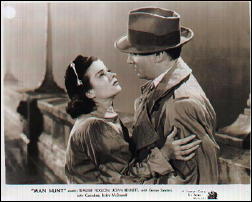
 Rogue Male (Clive Donner, 1976) BBC film of the Household novel that keeps the original more in its sights. Where Man Hunt is urban, has a love interest, and is quite light-hearted at times, Rogue Male is more to the point, quite brutal (the shots of Peter O'Toole's Thordyke after being beaten to a bloody pulp are tough to watch) and extends the cave scenes, making them much more a part of the story (Pidgeon spends barely 20 minutes in the cave in Man Hunt) as they are in the book.













the_duchess_movie_image_keira_knightley.jpg)