Showing posts with label Ned Beatty. Show all posts

Wednesday, May 4, 2011

Wise Blood

Wise Blood (Jhon Huston,* 1979) Flannery O'Connor's excoriating look at religion (in general) and Christianity (in particular) is one bitter chalice of wine, satirical, venomous, and with a savage wit that doesn't seem so comic as you see it playing out.  And the man who directed The Bible (and, rapscallion that he was, cast himself as Noah and The Voice of God), John Huston, takes O'Connor's fire-brand of a novel, and without being too showy, manages to dim the outrageousness and make it a little more real, and a little more relatable.

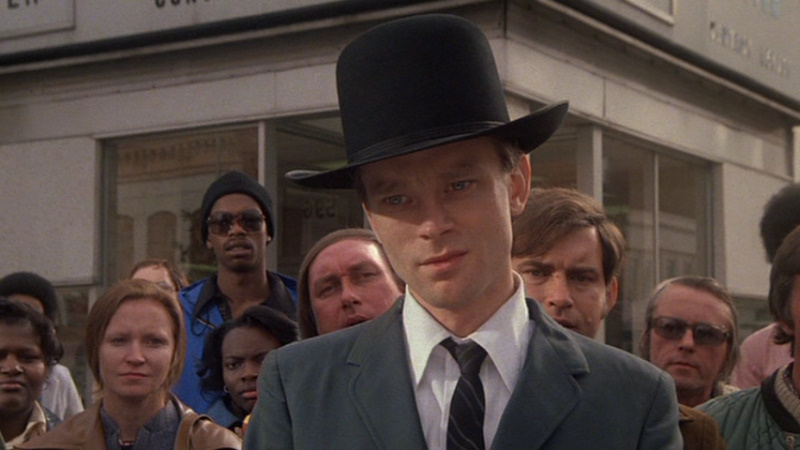
Brad Dourif (a sadly underused actor) heads the cast as Hazel Motes, just off the bus from the Army. He returns home to find the home of his preacher-father (played by Huston) abandoned. You never steer too far away from the family tree, and when Hazel buys himself a new black suit, more than one person says it makes him look like a preacher, which raises Hazel's ire. He intends to live his post-service life as unpreacherly as possible, despite appearances.

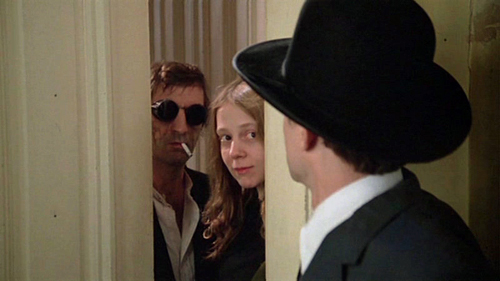
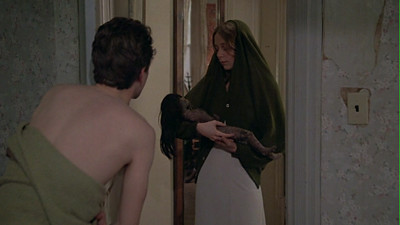
Going to town, he reluctantly gains one disciple, Enoch Emery (Dan Shor), not the most stable of followers, and has a run-in with the un-right Reverend Asa Hawks (Harry Dean Stanton) and his daughter Sabbath Lily (Amy Wright), which incenses Hazel, and shouts that he is going to create his own church, The Church Without Christ, just to show that he can do it, and to expose the chicanery of Hawks, who poses as blind and an interpreter of the word.  No one is what they seem: Sabbath Lily, while pretending to be virginal, is actually slatternly and pursues Hazel, something Asa approves of, as he wants to ditch her and travel light.

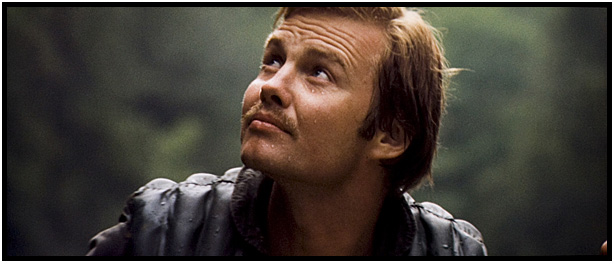
Hazel then has problems with another "preacher," Hoover Shoats (Ned Beatty), who creates his own church, The Holy Church without Christ (see the difference?), where its followers can interpret the Bible according to their own personal tastes.  That church takes off, with the help of its own direct interpreter of God's Word (played by William Hickey).  Hazel has lost control of his religious idea (such as it is), losing his Faith and his flock simultaneously, sending him into a murderous frenzy, then into a period of madness in which he rails against false gods, false relics and anything that smacks of devotion, then leading to an ascetic lifestyle that involves wrapping himself in barbed wire, before he can pay for his sins.  Creepy.  And harsh.

Huston keeps a lid on the blackness and bleakness, with an almost matter-of-fact presentation of all this, even being discrete at times.  Not to say the film isn't off-center, it is.  Obviously it is set in America, but one is hard-pressed to determine when.  Filmed in Macon, Georgia, it seems like it could be post-WWII with the attitudes and costumes, but the locals and vehicles are from the period before the filming—1979.  It gives you the sense of backwardness and a slight disorientation, like none of it is real.  Combine that Huston's clear-eyed direction and you begin to not know what to believe.

Apt.


* That's how it's spelled in the Main Titles, designed as a series of road signs with the credits scrawled in chalk on them by a child.  That particular child misspelled Huston's first name but the producers kept it for its childlike innocence.

Tuesday, March 22, 2011

The Killer Inside Me (2010)

The Killer Inside Me (Michael Winterbottom, 2010) Searingly sordid film noir that only reinforces what film noir truly is, rather than merely high-contrast photography and light bleeding through venetian blinds.  Film noir is evil breaking the rules of polite society...any rules... and The Killer Inside Me goes beyond it to even breaking the rules of film noir—nothing is sacred, not even that all-consuming reson d'etre that makes up the twisted spine of plots and double-crosses of film noir—love in the wolf's clothing as lustTrue merciless Sociopathy—the psychopathic disregard of everything—knows no boundaries, has no sweethearts, and at the end, may have no reason at the heart of it. 

Because there is no heart.

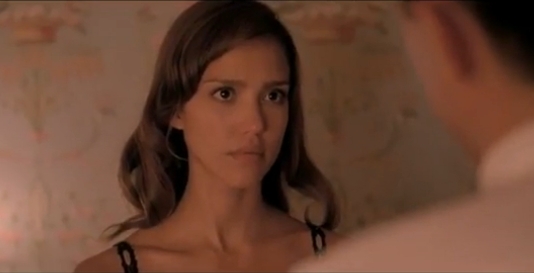
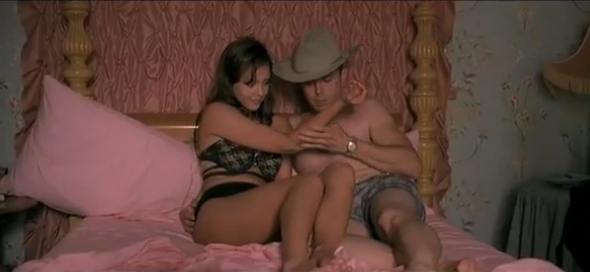
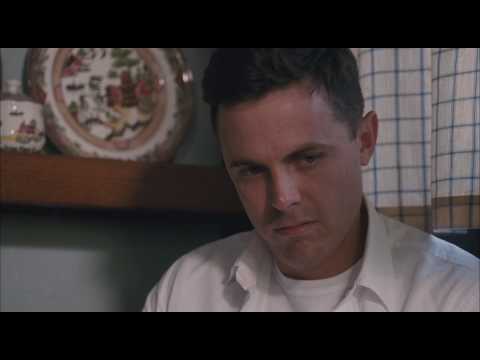
Deputy Lou Ford (Casey Affleck) is assigned a bull-shit job in the department: the scion of a big construction contractor is seeing a prostitute on the edge of town, and Daddy wants her gone.  Lou should pay her a visit, be polite, but suggest that her presence is not appreciated and she should look to relocating her cottage-industry.  Doesn't go that way, though.  When Joyce Lakeland (Jessica Alba) opens the door, sparks fly.  And they're not good sparks.  He's attracted to her but he's got a job to do.  She's attracted to him but she's got a job to do.  He insists.  She deflects.  Then she starts throwing punches.

It's love at first fight.  And before the story ends, Ford will follow a twisted path to revenge with maximum collateral damage, culminating in the type of eruptive fulmination that has precedence in such noir films as White Heat and Kiss Me Deadly.  It's not the "safe" bad manners of the vast majority of noir films but treads along the (hopefully) abandoned railroad tracks at the edge of the worst of human behavior and, without a thought, crosses over—the type of evil that noir wanna-bes like Frank Miller's Sin City only aspire to, but can only reach by rathcheting up the carnage.  Body counts don't count, not if you want to reach the tortured, torturing depths of a writer like Jim Thompson, the author of "The Killer Inside Me."

Thompson was a pulp-writer who used a typewriter as a blunt instrument, and his style so direct that Stanley Kubrick regularly hired him in his early directing career (working on The Killing and Paths of Glory), probably for that quality that Stephen King describes: "Big Jim didn't know the meaning of the word stop. There are three brave lets inherent in the forgoing: he let himself see everything, he let himself write it down, then he let himself publish it."  Such naked lack of self-censorship is at the nuclear core of Thompson's writing—a brave, maybe fool-hardy ability to go there.

So, The Killer Inside Me, with killer instincts towards thoughtless violence (against men...and—especially—women, who, traditionally in noirs, are dispatched with a single, sanitarily unseen gun-shot) will not be everyone's cup of razor blades.*  It's shocking, unholy, and (hopefully) repulsive to the viewer.  But, it plumbs the depths of the abyss to see just how black noir can be. 


* I spent the end of last year waiting for it to make it to theaters.  Never did.  Instead, I first encountered it on the shelf at Blockbuster.  The film is just too rough and dark to make a profit in a theater-run.

Tuesday, March 8, 2011

Rango

"A Fistful of Pixels"
or
"Draw!...The Gun, Not the Computer!!"

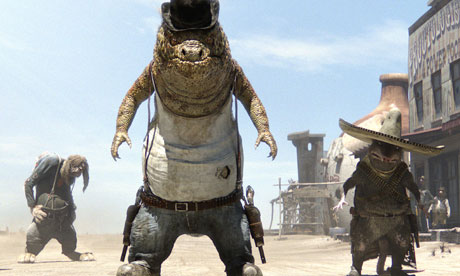
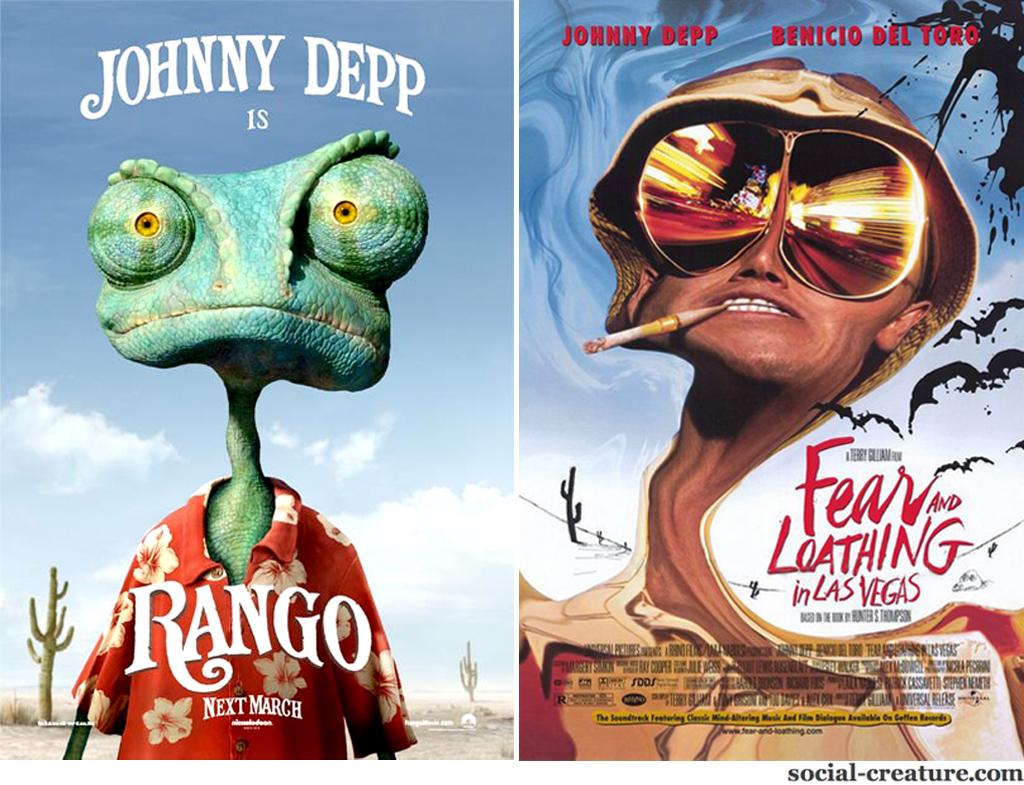
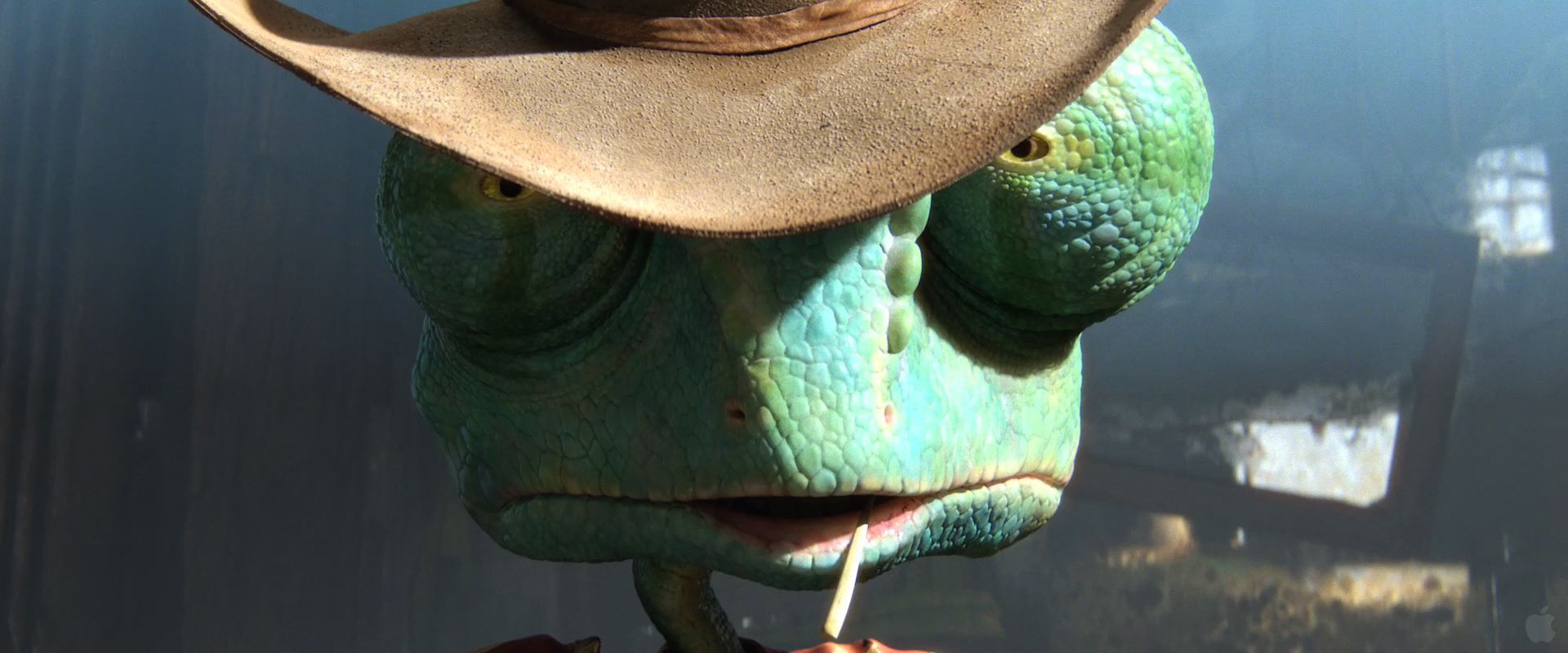
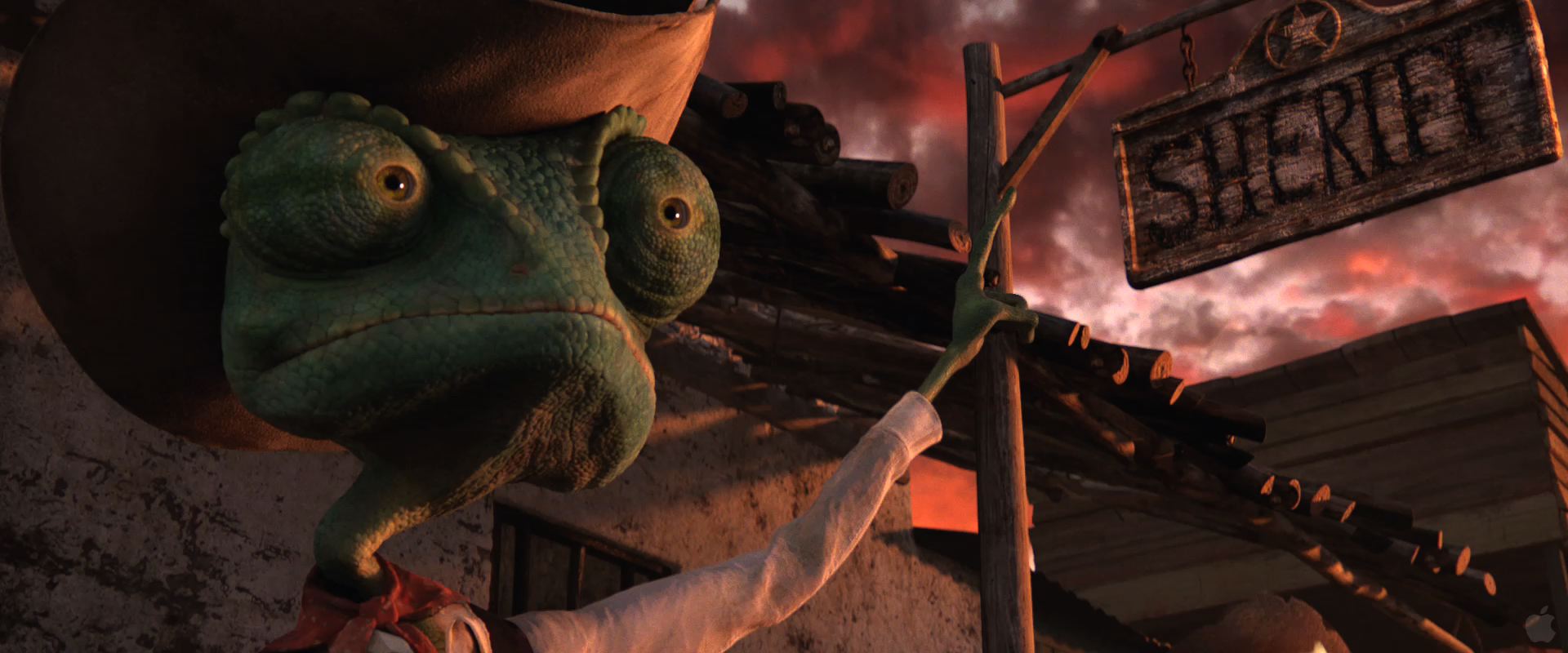
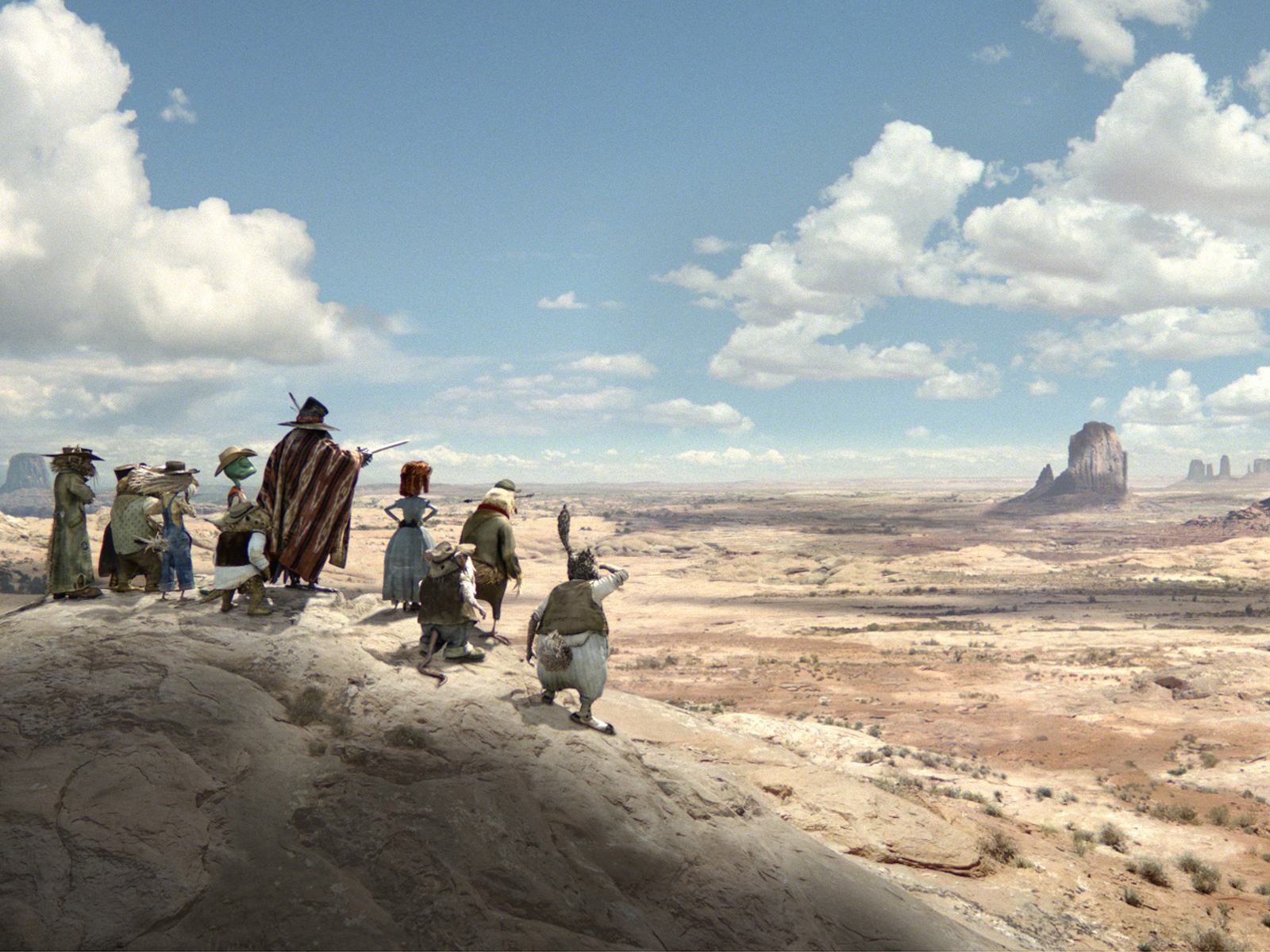
Rango is an amusing hybrid of animated feature and a rather encyclopedic mish-mash of stylized western themes, set in an animal kingdom that could only be imagined in a Ralph Steadman fever-dream.  Directed by Gore Verbinski (who manages to make interesting movies from least likely sources, like The Pirates of the  Caribbean*), it boasts a unique look, visually consulted by ace cinematographer Roger Deakins, while being the premiere animated feature to come out of George Lucas' FX house Industrial Light and Magic.

With such a background, the film should be technically interesting, and it is that, rich in detail and texture with a visual look unlike anything previously seen in computer animation.  Everything looks real and like it should exist in a real world, even though the physics of things could never, ever work.  It's a pixelated bizarro-world of funny animals just over the dunes from a mad civilization, a nightmare-world from inches off the ground.

While on a cross-country trip, a small highway accident causes a major disaster for a family's pet chameleon (with neatly quick-silver voice work by Johnny Depp)—an apt choice as he must change his persona often at times in the story—who finds himself stranded in the crushing heat of the desert, where his life of comfort leaves him ill-prepared for survival.  Fortunately, he is befriended by a crusty armadillo (voiced by Alfred Molina), who seconds after meeting the lizard is run over by a truck and he's left lying prone on the asphalt with the impression of a Michelin bisecting his stomach...and he enjoins Lars (er, Rango...whatever) to go on a vision quest to face his destiny.  Immediately, you know that this one is going to be a little different...not only for the kiddies, but also for producing partner Nickelodeon, which usually plays it a little safer and a little younger for its audiences.

It's something different, but also extremely familiar.  I've had to gut-check this review because Rango is so stuffed to the shaded-texture sweat-band with movie references that I had to make sure geek-love didn't color my perceptions.  Culled (one hesitates to say "written") by John Logan,** the story does so much reference-rustling that it feels like a pop-culture scavenger hunt—The Shakiest Gun in the West (and thus, Bob Hope's "Paleface" movies), High Noon, Shane, the Sergio Leone "spaghetti westerns," "Looney Tunes" cartoons, and a large back-wash of Chinatown.  More like a tsunami, that last one, as the Mayor of the desert town of "Dirt" (clever) is a an ancient tortoise that looks, dresses, and speaks (sometimes verbatim, in the voice of Ned Beatty) like John Huston's Noah Cross from the latter.

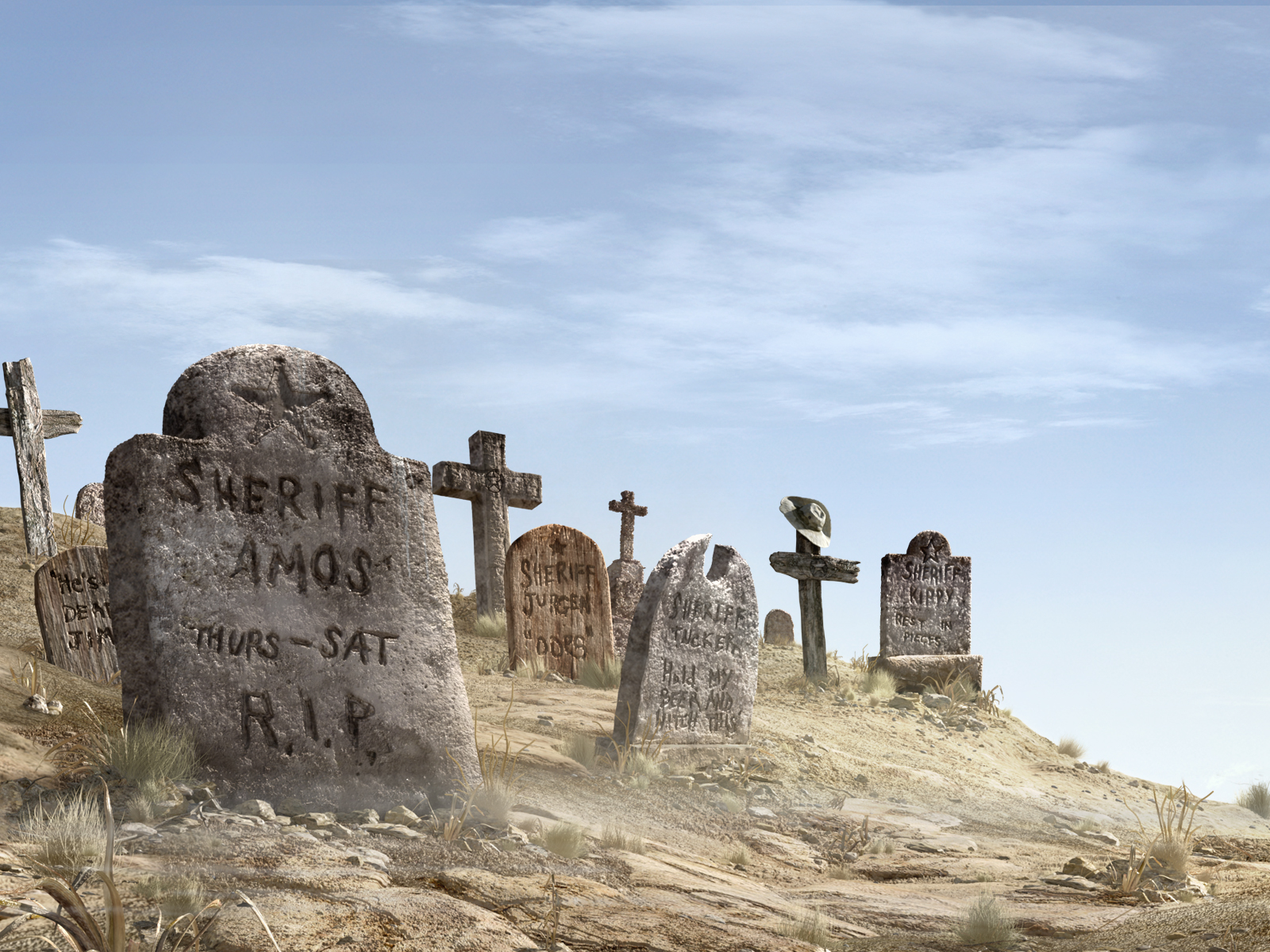
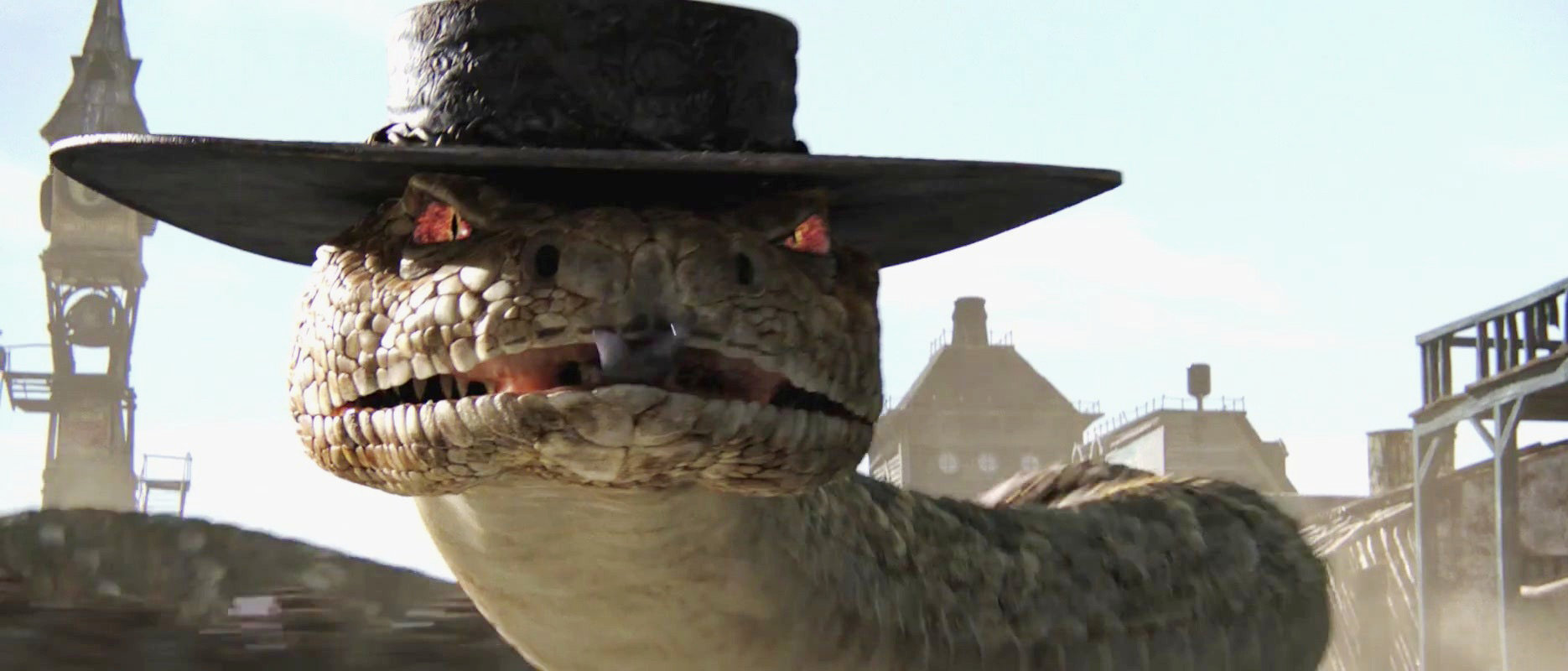
When the chameleon drags into town, the Mayor sees an opportunity to put a patsy into the vacant Sheriff's job (there is evidently a quick turn-around in the job), which also makes the movie resemble Mr. Smith Goes to Washington, thus keeping his claws in charge of the town's water supply, or lack of it.  Whatever his effectiveness in the job, one way or another "Rango" is going to be "over his head" in Dirt unless he stops concentrating on "blending in" and changes in ways more than appearance.  Along the way, he is threatened by bad-guys and helped by unlikely allies in a free-wheeling roller-coaster with enough hi-jinks for the kids and enough "inside jokiness" for adults, *** done at a speed that Verbinski can't achieve in live-action films (but aspires to).  This might give parents in the theater a little too much work to do, explaining things (like water-rights) while trying to deaden the "sugar-rush" the pace will give their kids.  And some of the images can be a little scary for the little ones, like big snakes (modeled after Jack Palance and Lee Van Cleef) voiced by Bill Nighy (shudder).
But, it is smart, clever and different, with good performances and that extra attention to detail that shows off the best of the art-form.

Rango is a Full-Price Ticket.


* My God, I'd forgotten that he directed Mousehunt, a film I got slapstick-happy chuckles over, but that I know annoys a LOT of people.  There are times when I see a bit of Mousehunt in Rango. 

** Maybe I'm being a little harsh there.  I liked this script by Logan and is the first of his that doesn't feel half-baked, and gives me hope that the guy might be able to bring substantial to the next Bond film, despite having replaced the more promising Peter Morgan.

*** For instance, as "Rango" is bounced around, caroming off the windshields of desert-highway traffic, he alights on one particularly relevant vehicle, and his meeting with an unnamed "Spirit of the West" (voiced so well by Timothy Olyphant  that I thought the real guy had come out of his announced retirement to do it—but he's keeping true to his word with his myth-busting coda performance.  Disciplined.)

Tuesday, January 13, 2009

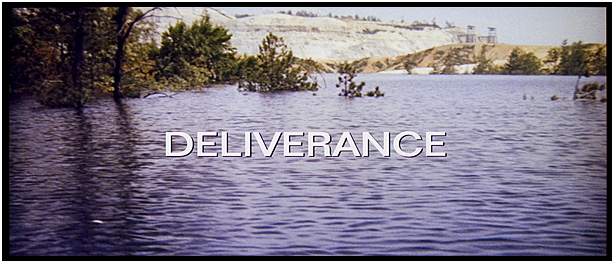
Deliverance

"Deliverance" (John Boorman, 1972) Let me start with an anecdote. I have a dog who's feisty as all get-out. There's not too much he's afraid of, other than missing a meal, and he can be quite aggressive in protecting his perceived territory. My wife and I took him camping, which he enjoyed immensely. That is, until it came time to sleep in the tent. At that point, the dog was quite agitated, especially because he could see through the mesh to the outside world. He kept looking at us as if we were insane: "Sleep? Out here? There's nothing but some fabric to protect us! Are you crazy?" He didn't sleep all night, dutifully looking around to make sure everything was safe, especially his idiot-masters who thought a tent in the wilderness was the same as a house.

I tell that story only because the dog realized something only a non-biped would realize--Nature is cruel. Cruel in tooth and claw, as they say. But "human" nature's got it beat ten ways from Sunday.

And so "
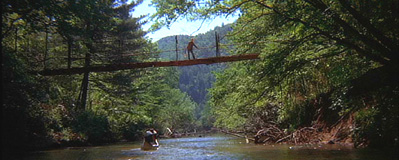
Deliverance," from the novel by poet James Dickey that I was quite fond of back in the day. At the time it appeared in theaters I was worried about its adaptation because the simple story, of four city-boys who take on the adventure of canoeing a river about to be dammed out of existence, could have been a crude film. But, instead, under the austere direction of John Boorman, it's themes of ecology and fool-hardiness, vain-gloriousness and finding strength where none was expected are enhanced and made into an almost mystical experience by the film-maker.

Boorman accentuates the danger of the surroundings by avoiding clearings and staging so many scenes in the middle of forests,
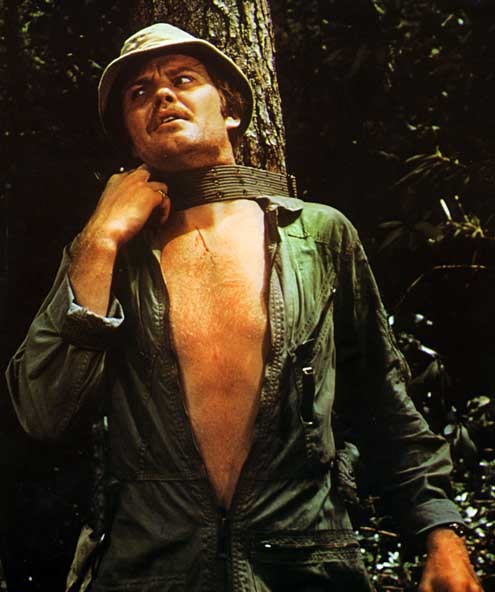
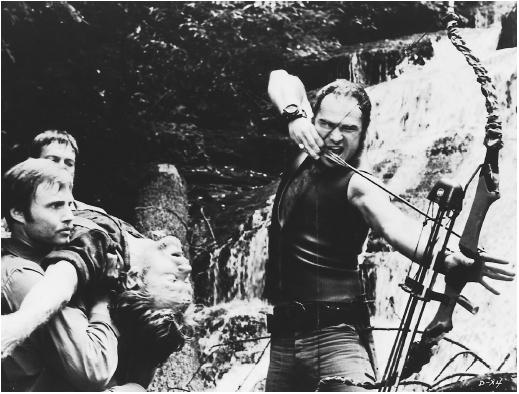
with a restless camera that shifts perspective around trees, moving the formations of them around, to the point where you think you can see things in the patterns of the woods. And he presents tangible, visceral horrors not present in the book-- a mountain man newly killed falling forward into the crotch of a small tree and remaining upright; macho Lewis Medlock (Burt Reynolds) pulling an arrow out of the breast-bone of a backwoods attacker ("Where'd the fletches go..." I thought when the act was done); the exaggerated horror of the men's injuries--the broken thigh-bone that pierces Lewis' leg (Reynolds does an incredible job undercutting his character's uber-stage-manliness with some of the most blood-curdling whimpering I've ever heard), the dislocated shoulder of Drew Ballinger (Ronny Cox) that has the man cradling his own head, sitting, weirdly on a rock out-crop, and Ed Gentry (Jon Voight) cutting an arrow out of his side to prepare for a final show-down below a sky that simmers in a yellow exposure-pushed sky. We won't even talk about Ned Beatty.

If there is a weak performance in the film it's author Dickey as the seething Sheriff who's just a little too-unsubtle in his suggestions. Voight, Beatty (his first film) and Cox do great work, and forgoing insurance, did their own rafting stunts. But Reynolds is terrific in his role, totally dominating the first half of the film, and, though out of action for the rest of the movie, still makes an impression. Hollywood may have a problem with him (doesn't take them...or himself...too seriously, perhaps?) but it would be nice to acknowledge that he can give gifted performances when gifted with good scripts.


In the latest pick, The Library of Congress chose "Deliverance" as one of the significant films to be added to the Film Registry.