Showing posts with label Z. Show all posts

Wednesday, January 9, 2013

Zero Dark Thirty

"You Know That Thing We Talked About"
or
How Are Things in Tora Bora?

Writer Mark Boal and director Katheryn Bigelow have made the two most important dramatic films about The War on Terror: the 2009 Best Picture Oscar Winner The Hurt Locker and now, Zero Dark Thirty, which covers the behind the scenes investigations to track down Usama bin Laden and the subsequent Operation Neptune Spear in Abottabad, Pakistan.

The film originally started as a feature about the carpet bombing of Tora Bora, and the field work leading to the decision and was scheduled to begin filming when the raid occurred.  Immediately, the other film was shelved, and Boal began writing this, incorporating his research from the previous work which dovetailed with the earlier effort.  It's a fascinating, troubling story of human beings waging war on an intimate level, trying to secure threads of information on a specific target, while also trying to keep track of new terror acts that might occur any time, any where.


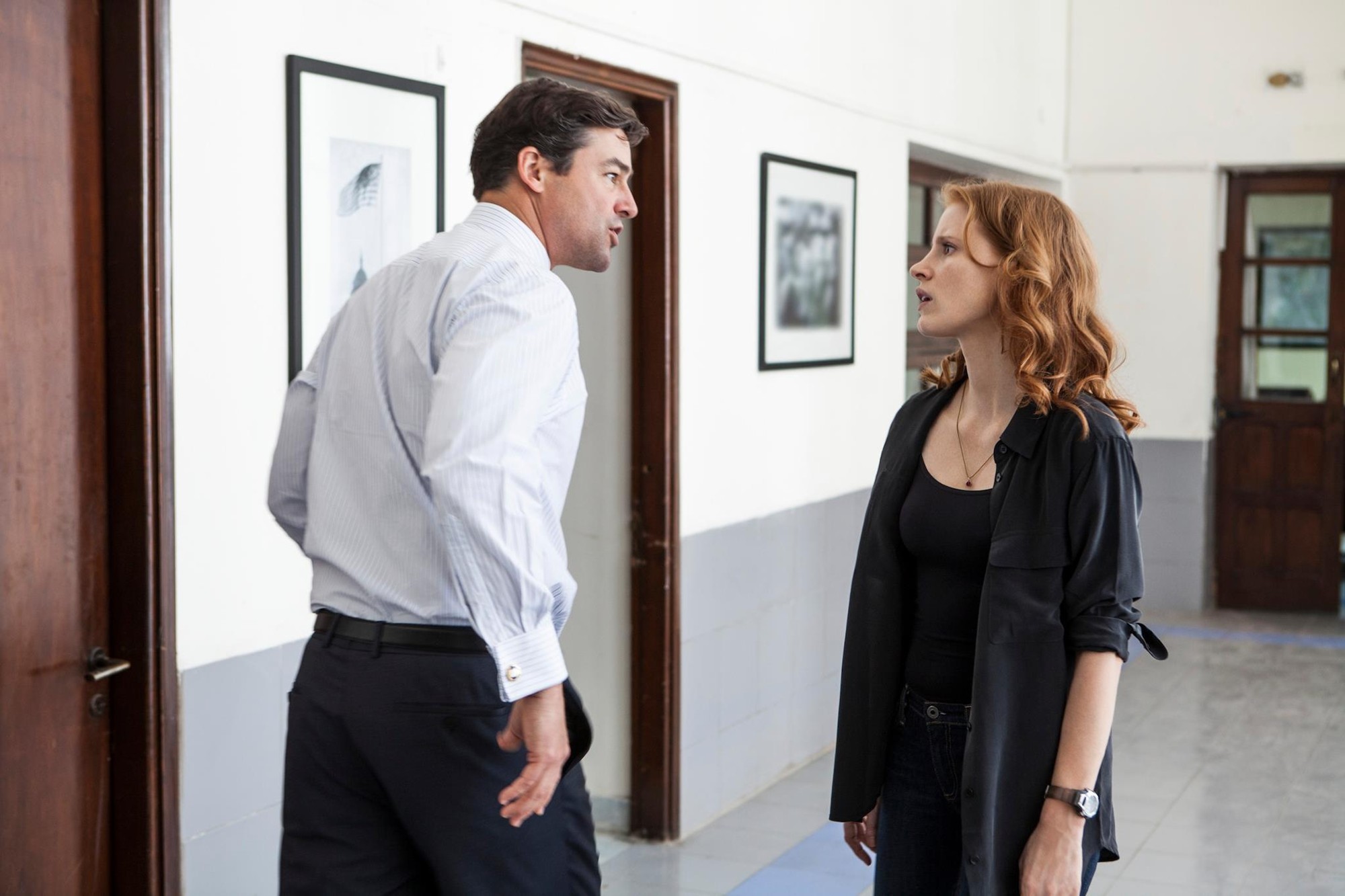
It focuses on one woman, a CIA analyst named Maya (played by Jessica Chastain)—her IM handle is "Maya173", but "Mark Owen," the nom de plume of one of the Navy Seals participating in the raid, refers to her in his book "No Easy Day," as "Jen." Maya is book-smart, street-savvy, but must learn "the ropes," literally, of interrogation by any means necessary.  She is trained in the way of torture by Dan (Jason Clarke), who has been at this for awhile and has it down to a science—the speech "If you lie to me, I will hurt you," the loss of control, the humiliation, the physical and mental stresses, the releases from which information may come.  Dan offers to keep Maya out of it, but she demurs.  She will participate.  She will actively sweat information out of the "detainees" in the euphemisms for prisons like "CIA Black Sites."  "You are not being fulsome in your replies" she yells as she slams her hand in the interrogation table.  And when she's not participating, she's poring over other interrogations, reams of intelligence, and being a general pain in the rear to her superiors and colleagues.  For station chief Joseph Bradley (Kyle Chandler), the job is to walk the razor's edge of politics and prevent more terrorism—he doesn't even care about bin Laden anymore, as there are too many attacks he's trying to prevent—every attempt that gets by is a failure.


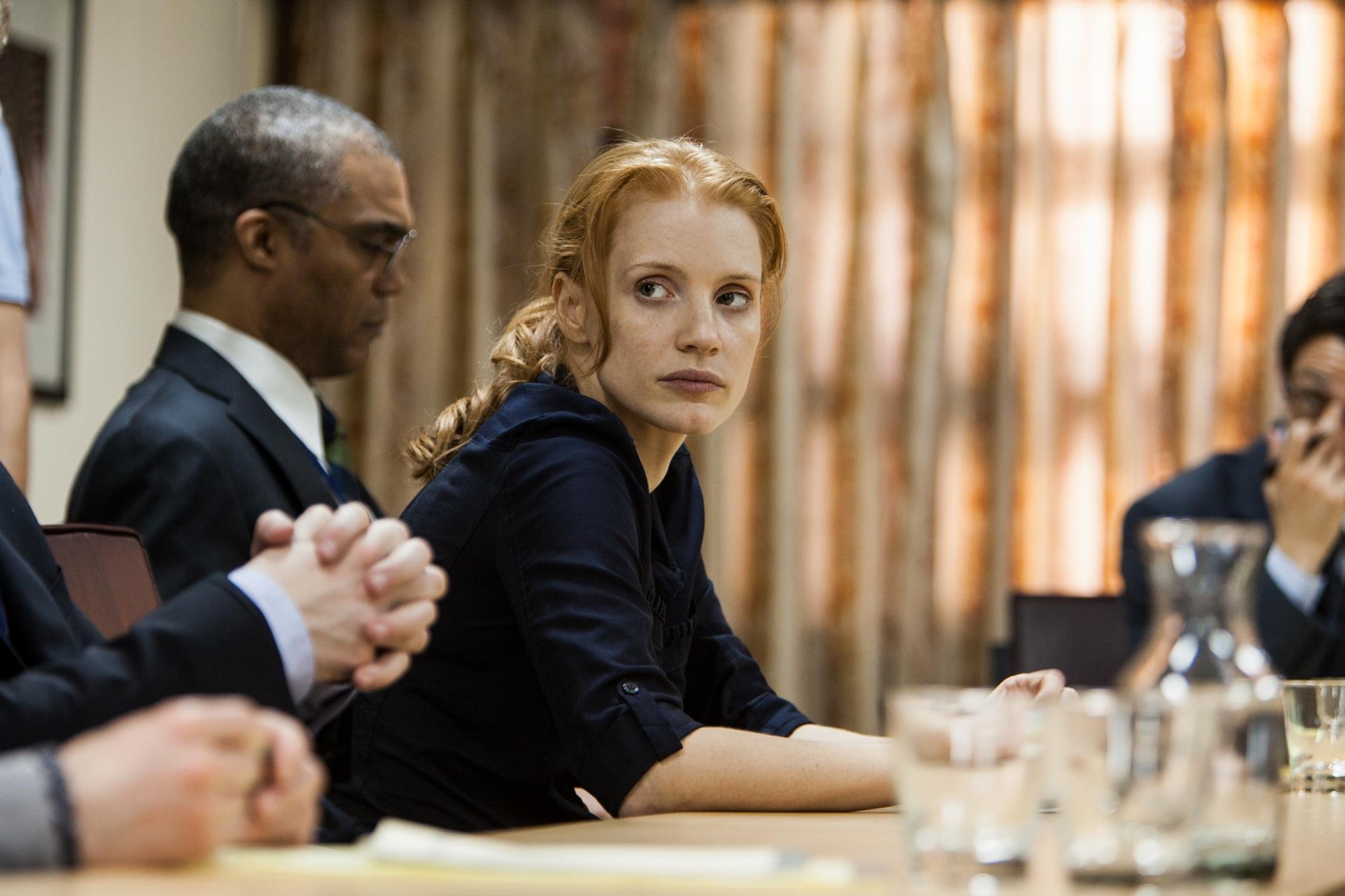
But, for Maya, bin Laden is an obsession, her white Muslim whale, and it takes a zealot to find another zealot.  She'll veer off into other investigations, particularly when some of her own are killed in an attack, but time only intensifies her resolve, almost becoming a mania, and her patient investigation is off-set by a gloves-off approach to her superiors (when asked her role in the briefing by Leon Panetta, played by James Gandolfini, she replies "I'm the m#####-f##### who found this place, sir"), almost as if her persistent pressure torture techniques are being applied up the chain.* The Obama White House dithers over action until absolute proof is obtained that bin Laden is held up at the Abottabad compound, but Maya is resolute.  When more cautionary analysts give the odds at 60%, she defiantly ups the odds to 100%—"Okay, 95%, because I know certainty freaks you guys out."  But, it's that certainty that fuels Seal Team 6 in their mission—in the videos below, she's specifically mentioned and lauded in Mark Owen's account.

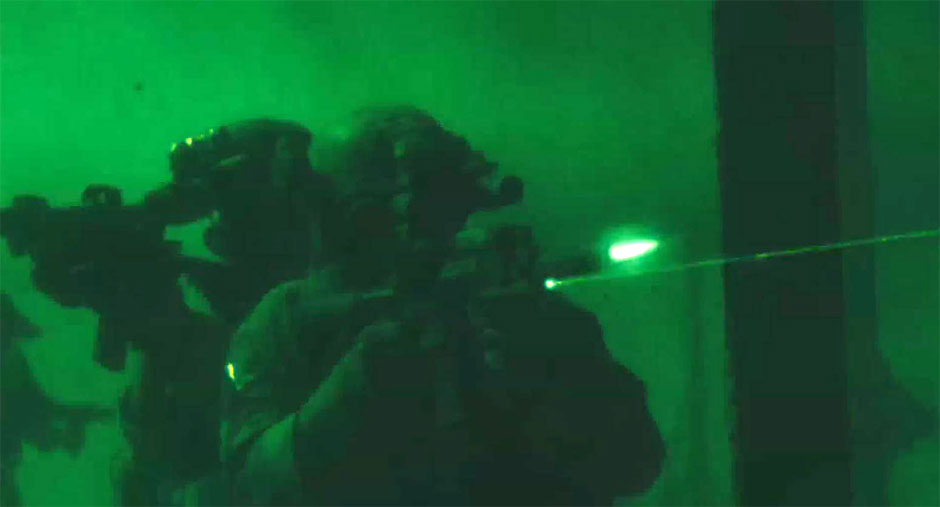
It is a fascinating movie, but a draining one, starting with torture scenes and ending with a recreation of the raid as it went down, shot mostly in tense disorienting night-vision.  The character of Maya, or "Jen" or whoever she is, is a fascinating one, a portrait of obsession and the toll it bears—she's repeatedly told that she looks "terrible" throughout the movie—and when she lashes out at her superiors for their lassitude, or just plain pusillanimaty, there is a definite sense of someone unhinged—controlled, but pushed to the breaking point.  A fury waiting to unleash, she is our version of a Holy Terror, a match for her enemies, and one can't help but wish her peace...suspecting that it will never happen.

Zero Dark Thirty is a Matinee.


The FBI's notice of bin Laden's death and the Situation Room during the raid.
Bear in mind, one helicopter went down during the raid.


* There are torture scenes, but they're not commented on, and any politicizing of it is so much hot-air—one can see in the film any position they want.  It walks a very fine line, merely presenting, and if someone tries to see their point of view in it, they're merely counter-projecting.  

Wednesday, October 21, 2009

Zombieland

"Woulda...Coulda...Shoulda."

The University of Florida, being on a pan-handle with nowhere to run, was recently thoughtful enough to include in their on-line instructions dealing with hurricanes and pandemics, a section on what to do in case the area was attacked by zombies, or as they put it, "life-impaired individuals."

The section was quickly expunged.

Some folks have no sense of humor.

It's a good thing
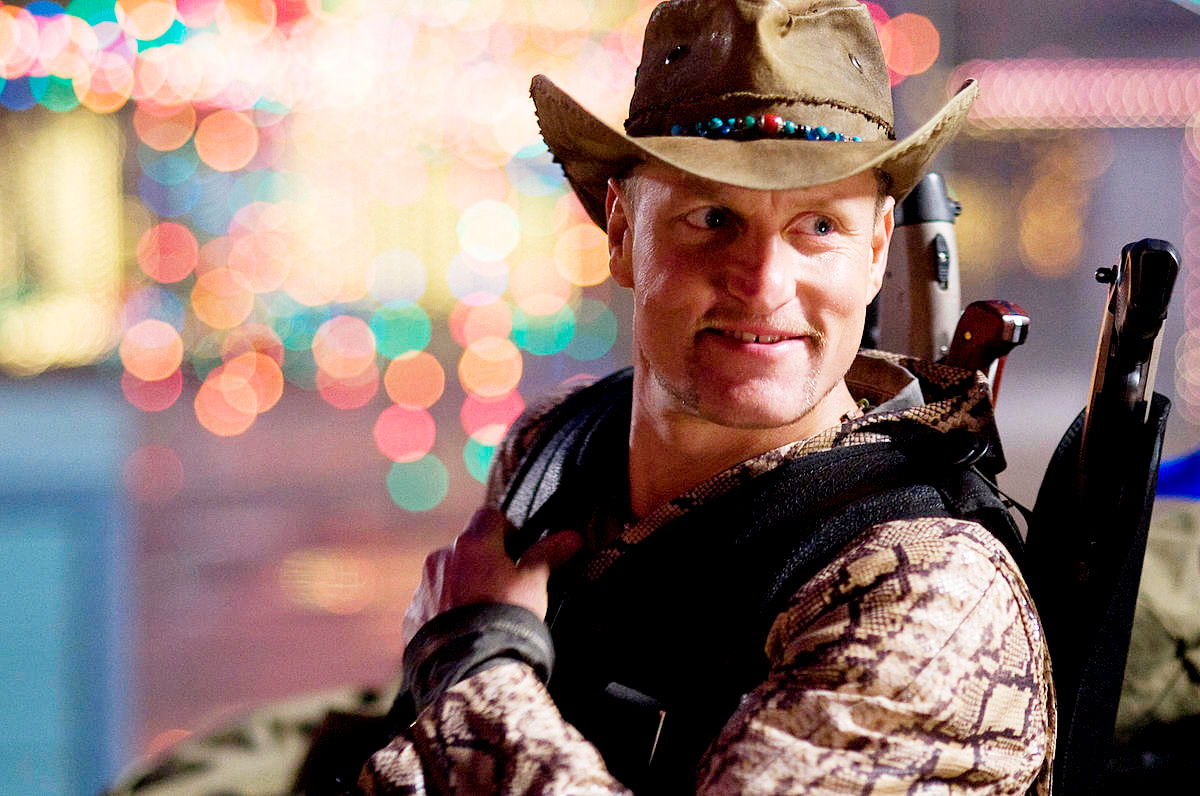
"Zombieland" does. Ruben Fleischer's zombie comedy has traded knife-sharp horror timing for sledge-hammer comedy timing, and the results are giddy, gory ghastly fun. At some point, the gangly slavering zombies just become targets and rarely are posed as threats and become merely a means to many grisly perforated punch-lines. The result of a fast-food outbreak of mad cow disease ("then mad human, then mad zombie" relates the film's geeky narrator "Columbus"), the flesh consuming zombies pass on the disease to their victims, and so on, ad nauseum.* Our narrator is on a one-man trek from his college room in Austin, Texas to try to find his parents in Columbus, Ohio, dodging zombies who are fast, but not very bright (at one point, he evades them by just running around a deserted parking lot in a circle, while they slavishly chase him like...zombies). Walking the highways with his carry-all on wheels he meets up with another fellow human, a rough-neck, well-armed and driving a Cadillac Escalante, and they pool their resources, conditionally. "No names" is the rule, so they call each other by their home-towns: "Columbus" (Jesse Eisenberg—combine Michael Cera with Hugh Grant's stammering timing and that's him) and "Tallahassee" (Woody Harrelson, who's extremely funny), and the film becomes an "armed-to-the-teeth" road-movie searching for the mythical "safe zone" that always seems to provide a goal for these movies.**

All the characters are smart (or dumb) enough and funny enough that everyone has their fair share of laughs. Ultimately, that's the final goal, along with a slice of relationship-therapy, as
the movie can't come to any real resolution of the zombie problem (which would be...running out of bullets...or zombies). The best one can do is compromise on the "I wouldn't if you were the last (whatever) on Earth" as that's become an attainable goal.

It's a funnier movie than "Shaun of the Dead," which gnarled on the same material, but "Zombieland" trades in its laughs for a Hollywood slickness that feels as if its going down well-worn storyline grooves of character resolution. The movie is given a seventh inning stretch by a gracious cameo by
Bill Murray (no, really...he must owe Sony Pictures a movie) and wonderful graphic work, which solves the University of Florida problem by providing the "Columbus'" rules for dealing with zombies by pop-up graphics that regularly illustrate an example. As a public service, I provide them here:

Rule #1: Cardio ("the fatties" went first)
Rule #2: Double-Tap (don't trust the first shot)
Rule #3: Beware of bathrooms
Rule #4: Seat-belts (wear them)
(Here, things get a little sketchy)
Rule #7: Travel light
Rule #17: Don't be a hero
Rule #18: Limber Up
Rule #22: When in doubt, know your way out
Rule #31: Check the back-seat
Rule #32: Enjoy the little things


"Zombieland" complies with Rule #32, and is a Matinee.

* And one would think "ad internecionem." Since these zombies are flesh-eating, that would mean that a lot of the zombies are missing limbs and would make lousy zombies, and eventually, well, supply and demand being what it is...wouldn't they basically eat themselves to extinction? In the words of "Tallahassee:" "Pretty soon life's little Twinkie gauge is gonna go empty." But I digress...

** The movie has such a fun time dealing with zombie and movie cliche's that it even addresses the issue:
Columbus: You know there's a place untouched by all this crap?
Tallahassee: Out east, yeah?
Columbus: Yeah.
Tallahassee: Out west, we hear it's out east, out east they hear it's out west. It's all bullshit. It's like you're a penguin at the North Pole hears the South Pole is real nice this time of year.
Columbus: There are no penguins in the North Pole.
Tallahassee: (pause) You wanna feel how hard I can punch?

Tuesday, August 5, 2008

Olde Review: Zardoz

This was part of a series of reviews of the ASUW Film series back in the '70's. Except for some punctuation, I haven't changed anything from the way it was presented, giving the kid I was back in the '70's a bit of a break. Any stray thoughts and updates I've included with the inevitable asterisked post-scripts.

This Saturday's ASUW films in 130 Kane are John Boorman's "Zardoz" and Brian DePalma's "The Phantom of the Paradise"

"Zardoz" (John Boorman, 1974)

"Zardoz speaks to you, his chosen ones:
You have been raised up from brutality, to kill the brutals who multiply and are legion. To this end, Zardoz, your God, gave you the gift of the gun"

Ooooo-kay! That little snippet from "Zardoz's" soundtrack* is a perfect example of what is right, and what is wrong with the film.

What we see during that resounding speech is a huge stone god-head floating over lush grass-lands while chanting subjects on horseback an on foot gaze, entranced by it. And it's a beautiful shot--nicely framed, beautifully photographed--even the special effect in the shot is nearly invisible. The sound is nice. The music, mostly the second movement of Beethoven's seventh symphony, is perfectly suited to this movie.

But the words emanating from that nicely modulated voice are really silly.

And so, in a nut-shell, there is "Zardoz"--due to the great abilities of its director John Boorman, whose previous film was "Deliverance" ** (and who is currently working on "The Heretic: Exorcist Part II"),*** it is a beautiful film to look at and listen to, but it is ultimately a very silly movie.

Maybe the script isn't too important. It is possible to ignore it when Boorman is communicating mood through his magnificent images and stately music. It is in the moments of pure image and music that "Zardoz" achieves the kind of epic stature that Boorman obviously wanted. And it is fun while the inspiration lasts, which is about half-way through it. It's about this time that the audience will wonder how in hell the damned thing is going to end. It's obvious by seeing the ending that Boorman wondered himself, and couldn't come up with anything other than a cop-out. Well, all I can say is enjoy what you see--it's quite fantastic. Try to ignore the plot.

And once and for all, maybe you should re-appraise your view of Sean Connery as an actor. It is "Zardoz" that slowly eased him out of the James Bond stereotype he had been mired in for so long, and into his current stream of swashbuckling roles, and in the very difficult role of Zed, the pivotal role of the film, Connery is nothing short of perfect. And so, "Zardoz" is a mixed bag of fine acting, the beautiful image and the hackneyed script.

Broadcast on KCMU-FM on November 5th and 6th, 1975

Um.....maybe the beautiful image. It's hard to say that Connery was doing stellar work running around in thigh-high boots and a red diaper (see below), spouting inane dialog, albeit opposite Charlotte Rampling. Truth of the matter is "Zardoz" is what Boorman made when he wasn't allowed to make "The Lord of the Rings," and Connery played Zed after Burt Reynolds, who was cast, (wisely) bowed out. "Zardoz" is just a stoopid, pretentious fantasy wanna-be, that keeps you guessing about where all this stuff came from--and when it's revealed to be an extremely simplistic (silly) conceit, you want to walk out. It all ends with one of those teen-pleasing Riots Against Authority that were popular "in the day," and sort of sputters to an ending of sorts. It's just a bad, bad film.

So was "The Heretic." Incredibly, someone gave Boorman money to make another film, and though it veers awfully close to the same sort of sophomoric kookiness of it predecessors, his film of "Excalibur" was a stylistic triumph for the director. It's a good thing, too. John Boorman is a fine director, when he has good material (which he can write, as well).

Connery was just coming into his own as his own actor away from
007, with good work in "Murder on the Orient Express," and "The Wind and the Lion." His best work was still ahead. "The Man Who Would be King" would open five weeks after this review was written.


* These reviews were accompanied by sound-clips or music from each of the films. This one started with that pretentious quote. FCC rules kept me from continuing it. Wanna read it? (Well, don't say I didn't warn ya...) "The gun is good. The penis is evil. The penis shoots seeds, and makes new life to poison the Earth with a plague of men, as once it was, but the gun shoots death, and purifies the Earth of the filth of brutals. Go forth . . . and kill!"

** Need to do a review of "Deliverance" one of these days. That is a great film.

*** Well, we won't bring that one up, only to say that Boorman got much better about the subject matter of his films.


Okay--Connery didn't want to play "Gandalf" because
he didn't understand "The Lord of the Rings"--but he understood this??
Total Film magazine rated Connery's costume at number one of "the dumbest decisions in movie history" in 2004.


Friday, March 21, 2008

Zelig

"Zelig" (Woody Allen, 1983) One of The Woodman's most experimental films, playing not only with the story-telling form but the way film documentary can be distorted. "Zelig" was an early example of the "mock"-umentary, telling the tale of Leonard Zelig (Woody Allen), famed in the Roaring '20's as "The Human Chameleon" for his ability to "blend" with whoever he's with. Zelig is "the ultimate conformist" changing views, attitudes, dress and skin color in order to feel safe and accepted. Contemporary "interviews" are interspersed with amazingly integrated historical footage that places Zelig at Yankee Stadium, in a ticker-tape parade down Wall Street, at the Vatican with Pope Pius, and, hilariously, on the dais behind Hitler at the Munich rally. The interviews are fine with such folks as Saul Bellow, Susan Sontag and Dr. Bruno Bettelheim playing along, although there are some shifts in the folks playing older versions of the subjects of the "found" footage. There is a verbal disconnect between the actresses playing Dr. Eudora Fletcher (Ellen Garrison and Mia Farrow), and Farrow's portrayal is flat and mousey, though she serves the purpose of Allen's straight man, especially in a scene where she calls Zelig's bluff about posing as a fellow psychiatrist ("You've got problems, lady!"). The satire has depth, showing Zelig's "influence" on society with a wealth of tin-pan alley songs, including "Chameleon Days" sung by "Betty Boop" herself, Mae Questel. And one can't argue with the moral of the story: "It just goes to show what you can accomplish when you're a total psychotic!"

Monday, January 14, 2008

Zodiac

"You're doing it again! That thing I don't like that starts with an 'L'"
Paul Avery (Robert Downey, Jr.) in "Zodiac"


David Fincher's "Zodiac" is the most disciplined and least-flashy movie in his career. A 2 hour, 45 minute overview of California's "Zodiac" serial-killer case from almost the start to the finish--a nearly thirty year tale that is less about the crimes, specifically, but more about obsession: the obsessions that sparked the crimes and the obsessions, in turn, sparked by them. Over time as personalities change, careers and fortunes rise and fall, as the city morphs and hem-lines and side-burns flare and recede, the obsession burns and inflicts its own damage. It's a movie about that damage and the shockwaves that killers inflict beyond the immediate victims.

This is not to say that "Zodiac" is not violent--it is, at least for the first half-hour or so, but it is the cold-blooded casualness of the violence that stuns (at one point "Zodiac" is seen pummelling a woman and you realize to your horror that she is being stabbed--these are the least "theatrical" killings I've seen on-screen), and those expecting a gore-fest will be let down by the lack of screen-time devoted to the actual murders, but Fincher maintains a looming (that "L" word mentioned above) unease that infects later scenes with dread.

Stay to the end of the credits and you'll be presented will three big-screen pages of technical consultants (many of whom are the real-life characters portrayed in the film) and a long list of thanks to communities who figured in the convoluted path of the tale. Meticulously researched and painstakingly recreated (I've seen glowing comment threads from San Franciscans amazed at the scruplulousness of the production), the same care is also taken with the many performances from a non-stellar, but reliable cast of character-actors all doing subtle, nuanced work. From Robert Downey Jr.'s fussy turn as a scruffy San Francisco Chronicle reporter, to Anthony Edwards and Mark Rufalo as the two lead SFPD detectives investigating (you can imagine Rufalo's Detective Toschi serving as a model for both Steve McQueen's "Bullitt" and Eastwood's "Dirty Harry" even though his performance is far-afield of those star-turns), and Jake Gyllenhaal as the character involved longest with the case...except for the killer.
"You've got the look." An acquaintance of a Zodiac suspect guesses immediately that's what Gyllenhaal's Robert Graysmith wants to talk about and it's the eyes that are the dead give-away. Gyllenhaal has used that moony-goony look of his to great effectiveness in "October Sky" and "Brokeback Mountain," but put an edge to it and he's got the most effective "thousand mile stare" in Hollywood as in "Jarhead" (He's matched by Rufalo's Toschi, his eyes glinting hard-cold while maintaining a disarming, constant half-smile). It pays off towards the film's end when two stalkers who've never met recognize each other immediately. For all the period detail that informs the movie, the drama is carried along and climaxed by the look in people's eyes.

Fincher harkens back to the paranoid thrillers of the 70's, even going so far as to use the Paramount and Warners Studio logos from the era, and reviving the career of composer David Shire whose sombre, oppressive scores provided the low rumblings of such films as "The Conversation" and "All the President's Men."

But despite the intricacies of plot, the labyrinth of clues and puzzles, the shadowy corridors, darkened streets and blind alleys, the film is never allowed to lose focus or drag. One is never aware of the length of the film, only the passage of time in the film. And that's an amazing accomplishment, but not the last one.

Because for all the time-lapse CGI tricks Fincher employs (and some of the essential clues that are focussed on), there is an acknowledgement made of the most lethal serial killer: in the end, time gets all of us. Our life-histories catch up, and right or wrong, no one goes away unpunished.


"Zodiac" is a full-price ticket